
Clean Energy
AQP Bio
Olympia
Responsible Oil
AQP Classic
ISUT®
Company
About
Articles
Contact our team
ISUT™ tech cuts oil sands emissions by 35% with Alberta's support. Federal collaboration can turn ambition into action.
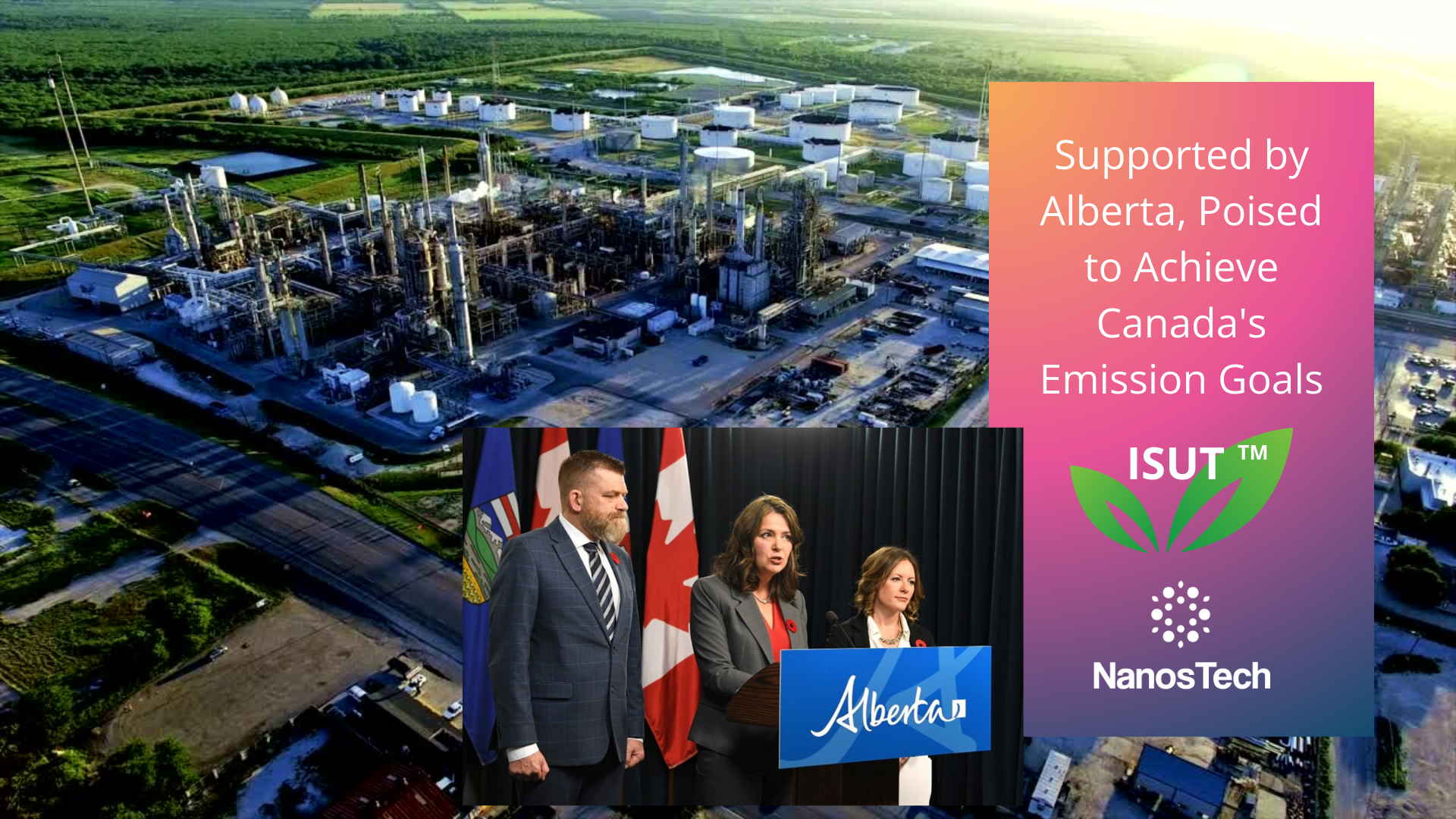
As Canada faces mounting pressures to reduce greenhouse gas (GHG) emissions, the Federal Government recently proposed a GHG emissions cap for the oil and gas sector—a move intended to support national climate goals but has sparked debate, particularly in Alberta. At the heart of this discussion is the need for solutions that balance environmental progress with economic stability, especially in the oil sands.
Technology can bridge these priorities. Our ISUT™ (In-Situ Upgrading Technology) is a field-ready innovation that promises a one-third reduction in oil sands production emissions. Supported by Alberta Innovates and Emissions Reduction Alberta (ERA), ISUT™ is scheduled for field testing next year, potentially substantially impacting emissions reduction and industry performance.
Alberta has taken proactive steps to reduce emissions through innovation, reflecting its commitment to sustainable and economically balanced climate action. Premier Danielle Smith and her administration, through Alberta Innovates and ERA, are backing NanosTech’s ISUT™ technology—a transformative approach with the capacity to achieve the Federal Government’s ambitious 35% emissions reduction target.
This endorsement underscores Alberta’s forward-looking stance, where technology drives meaningful climate progress. By supporting ISUT™, Alberta demonstrates its commitment to solutions that reduce emissions and sustain the vitality of Canada’s oil and gas sector.
ISUT™’s application in in-situ oil sands production offers unique advantages that make it one of the most promising pathways for emissions reduction:
For Canada to reach its ambitious emissions reduction targets, practical and scalable solutions like ISUT™ must receive robust support. While the Federal Government has established ambitious goals, investing in technologies that enable them is critical to achieving them.
ISUT™ aligns directly with Canada’s climate objectives, but comprehensive support from both levels of government is essential to achieve its full potential.
While the debate over emissions caps and climate policies continues, there is one point on which all parties can agree: Canada needs implementable solutions to meet its climate targets.
Canada’s climate future depends on collaborative efforts that prioritize sustainable innovation. NanosTech remains committed to making ISUT™ a cornerstone of emissions reduction in the oil sands, supported by Provincial and Federal Government stakeholders alike.
NanosTech invites Federal and Provincial leaders, industry players, and stakeholders across Canada to join us in advocating for technology-based solutions to achieve climate goals. By embracing ISUT™ and aligning our efforts, we can turn ambition into action—realizing meaningful GHG reductions while bolstering economic resilience in the oil sands.
Director of Technology, ISUT: Chris Brockman
CEO: Myles M. McGovern
CTO: Pedro Pereira-Almao
Media Enquiries — EVP: Naomi Pereira
Have a feedstock challenge to solve?
Bring us your toughest processing problem and our team will help map the right catalyst pathway.